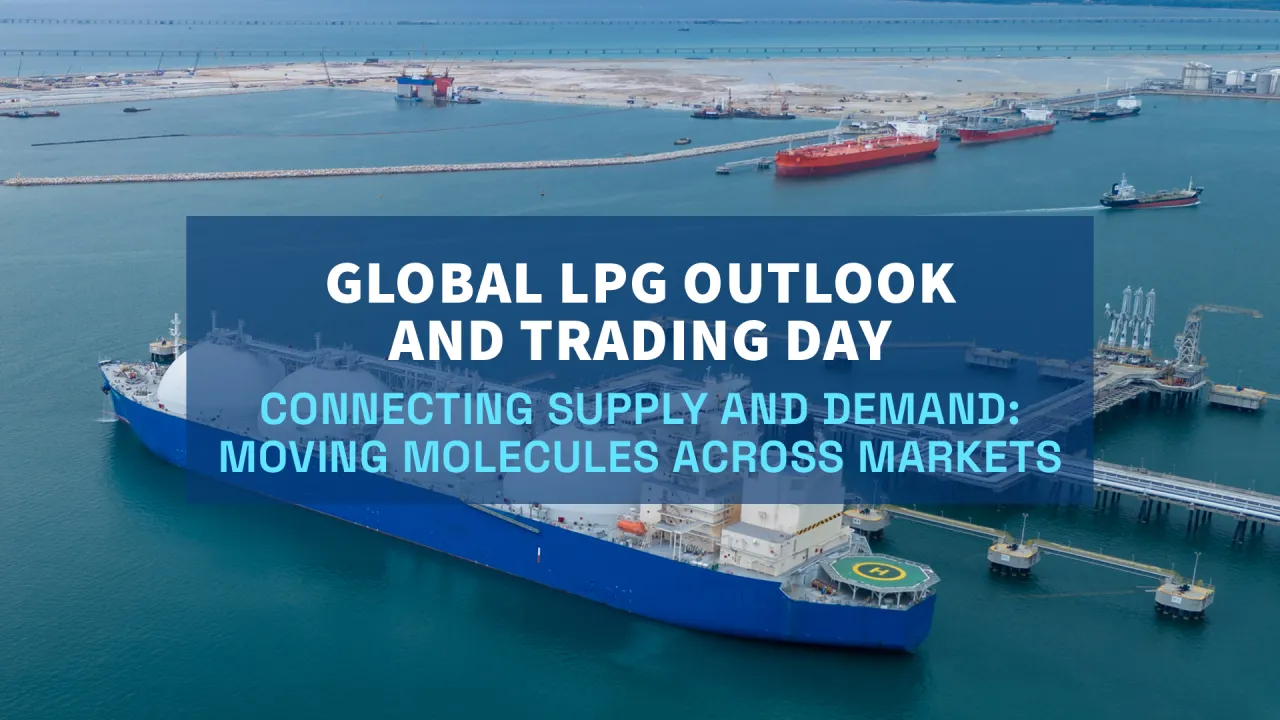
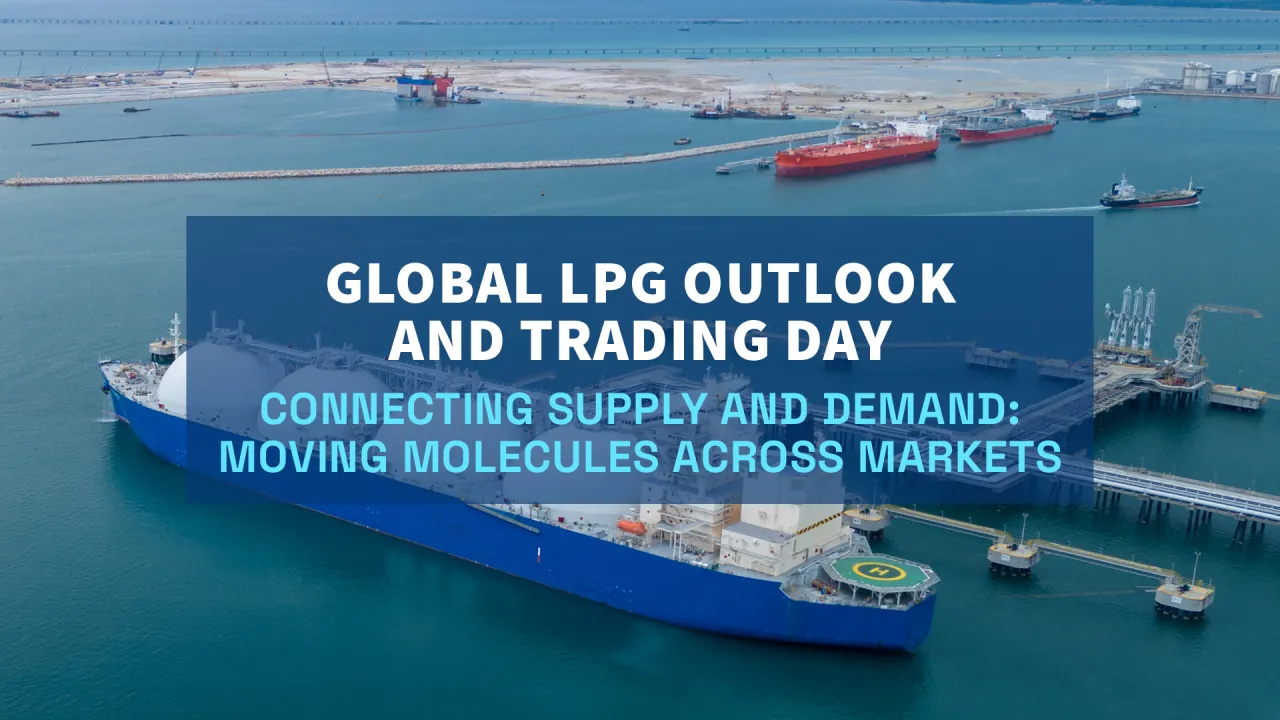
REPLAY - Global LPG Outlook and Trading Day Part 2 - Connecting Supply and Demand: Moving Molecules Across Markets
ICC | Level: B2 | Room: ÜSKÜDAR 2
Replays
Information
Global LPG trade is being reshaped by shipping, freight, infrastructure, logistics and compliance.
Hear directly from buyers, market experts, and shipowners on where flexibility exists, where constraints are emerging, and how these realities are changing trade flows and commercial decisions.
Strategic Insights
- Understand how shipping availability, fleet dynamics, and logistical constraints determine which LPG trades clear.
- Understand where logistical flexibility exists across shipowners, traders, and major buyers and where constraints are binding.
- Gain insight into how logistics considerations are shaping commercial strategy decisions.
Plenary sessions: Simultaneous interpretation from English to Turkish
Venue
ICC
AI-generated summary
Industry experts discuss how geopolitical disruptions, shipping constraints, and fleet dynamics are reshaping global LPG trade flows, emphasizing the critical need for supply security, diversification, and long-term resilience amid unprecedented volatility.
Takeaways
- Shipping capacity is the critical constraint: Panama Canal restrictions and Middle East disruptions have created severe VLGC shortages, extending voyage times from 50 to 70-80 days and driving freight costs to unprecedented levels, making it the primary bottleneck in moving molecules from supply to demand centers.
- US supply dominance is structural, not temporary: With the US now supplying approximately 60% of the global market and growing, major importers like India are permanently diversifying away from sole reliance on the Middle East, citing 'trauma' from recent disruptions that will reshape trade flows for generations.
- Vertical integration into shipping is accelerating: Major buyers like IGAS are investing in owned VLGC fleets rather than chartering to secure supply chains, viewing vessel ownership as a hedging mechanism against freight volatility and a necessity for ensuring product delivery.
- Affordability crises threaten demand growth: In developing markets like Bangladesh and India, price spikes and high shipping costs have triggered demand destruction, forcing consumers back to coal and wood, highlighting the tension between market economics and energy access.
- Diversification and patience are essential for resilience: Resilience requires diversifying supply sources across the US, Algeria, and Argentina, maintaining long-term strategic patience rather than overreacting to short-term volatility, and recognizing that infrastructure and fleet capacity will only balance by 2027-2028.
Memorable Quotes
- Elifcan Yazgan: This year has been hell... Moving molecules is the main problem because we know that there is a lot of product in the U.S... We know there's product in Algeria... There is availability everywhere, but we cannot simply move product from point A to point B... it is extremely expensive.
- Elifcan Yazgan: India used to buy 90% of its volume from Arabian Gulf. Now even if the war ends, I think they will never go back to 90% again... this has been a big trauma to the market and I'm sure it will be carried over generations, this trauma.
- Knut Solheim: As a ship owner, you do like inefficiencies... I honestly think... Things like Panama Canal is going to be a little bit of a new norm.
- Bill Briggs: You really got to get back to the fundamentals... Sometimes the best thing is to sit back and do nothing and wait and watch and listen and analyze the environment around you and then try to find a path forward through all the noise.
- Emma Lamb: LPG is a by-product, so the production comes and then we have to find a home for it... Those economics all need to be positive in order for it to actually work.